Gregory Autin | March 15, 2026
Press freedom is under attack worldwide. Today, the most serious risks include killings, imprisonment, surveillance, abusive laws, internet shutdowns, and the accelerating economic collapse of independent media.
International law is clear. Journalism is protected under Article 19 of the International Covenant on Civil and Political Rights, as interpreted by the UN Human Rights Committee's General Comment No. 34. Comparable protections exist in Article 10 of the European Convention on Human Rights, Article 13 of the American Convention on Human Rights, and Article 9 of the African Charter on Human and Peoples' Rights.
States must do more than avoid censorship. They must protect journalists from violence, intimidation, and impunity.
The facts show that these dangers are real and global. UNESCO reported that at least 68 journalists and media workers were killed in 2024, with more than 60 percent of those killings occurring in conflict countries – the highest share in over a decade. The Committee to Protect Journalists found that 361 journalists were behind bars on December 1, 2024, one of the highest totals ever recorded. Around 85 percent of journalist killings since 2006 have never reached a court – impunity remains the rule, not the exception.
UNESCO has warned that internet shutdowns are spreading, with at least 300 shutdowns in over 54 countries during the last two years – 2024 the worst year on record since 2016. Meanwhile, Reporters Without Borders identifies economic fragility as the leading threat to press freedom in 2025, with media outlets in 160 of 180 countries unable to achieve financial stability – and the global press freedom situation classified as "difficult" for the first time in the Index's history.
Political and regulatory pressure compounds these threats. In the United States, Brookings has argued that the Trump-CBS dispute entangled media freedom with FCC regulatory power, while critics point to the vulnerability created by growing media concentration and the withdrawal of public funding for broadcasters reaching over 400 million people worldwide. These pressures are not unique to the United States – they follow a pattern visible across dozens of countries where legal, financial, and digital tools are used to silence scrutiny without formally banning it.
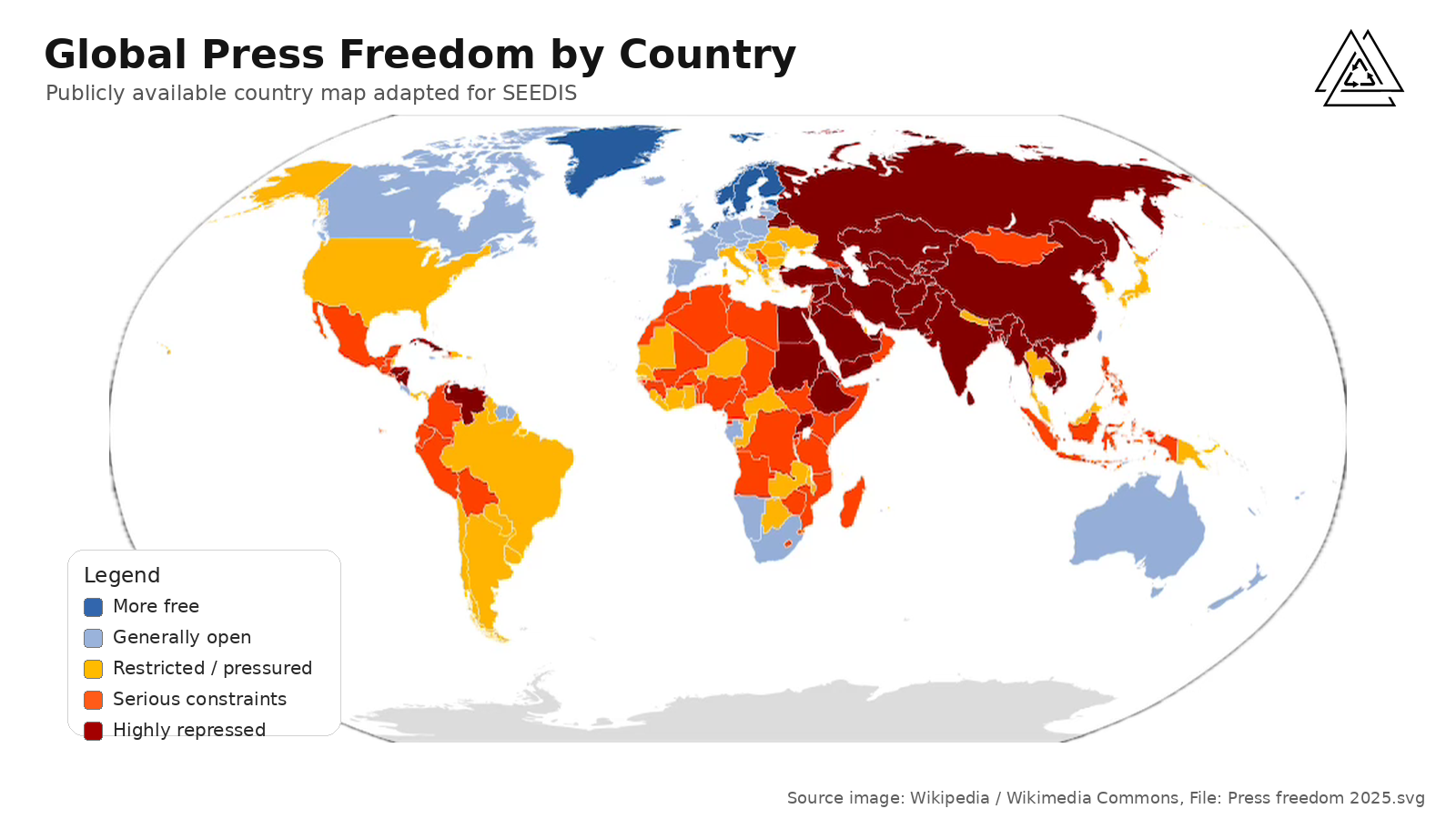
This is the challenge press freedom now faces: not only defending the legal principle of a free press, but enforcing it in practice – before repression, shutdowns, and fear become permanent features of public life. SDG Target 16.10 commits states to ensuring public access to information and protection of fundamental freedoms. The data show that commitment is failing at scale.