Hotel owners engage operators to manage their properties on their behalf. They are generally responsible for the management of the [donotmark]supply chain[/donotmark], [donotmark]logistics, inventory, quality control, budget, and third-party relationships[/donotmark].
Depending on the [donotmark]property and the operating agreement between the owner and operator[/donotmark], the general manager (GM) may:
- Hire staff and handle payroll;
- Run the operational departments;
- Manage vendor relationships;
- Determine room rates and run promotions;
- Perform [donotmark]property[/donotmark] maintenance and recommend capital expenditures;
- Develop [donotmark]budgets[/donotmark] and produce financial reports for the owners;
- Curate the hotel’s online presence and implement marketing strategies; and
- Coordinate [donotmark]renovations or expansions[/donotmark].
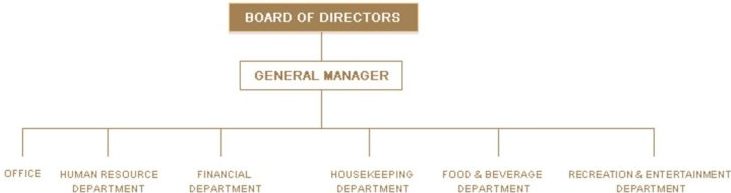
Except for the GM and possibly the financial controller, hotel staff is commonly employed by the hotel business owner. This protects operating companies from the legal obligations associated with being an employer and makes it easier for owners to switch operators without needing to enter into new employment arrangements with staff.
Hotel operations are separated into [donotmark]front-of-house and back-of-house operations[/donotmark]. Front-of-house (FOH) includes the lobby and related services, dining areas, fitness facilities and recreational areas. Back-of-house (BOH) includes such support services and areas as reservations and front-desk office support, the kitchens, housekeeping, human resources, sales and marketing, accounting, security, and maintenance and engineering.
Where business owners engage a management company to manage and operate the hotel, they enter into a management agreement under which the management company is the counterparty. For a franchise, the franchisor is the hotel owner's contractual party.
Under a hotel management agreement (HMA), a brand or management company takes over the operations [donotmark]of a hotel from the owner in exchange for a fee, with the owner bearing all risks and the operator manages the property as the owner's agent[/donotmark]. Under a franchise agreement, the owner uses the brand, distribution channels and the proprietary knowledge of the franchisor while retaining all risks and liabilities and control of the property.